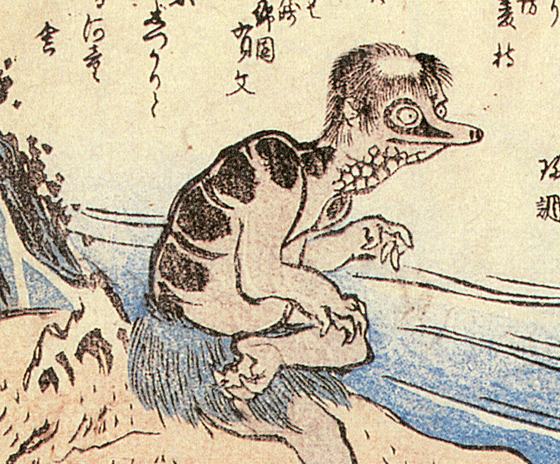
Quick Facts: What is a Kappa?
The Kappa (河童), literally “river-child,” is one of Japan’s most famous and recognizable Yokai. Living in rivers and ponds across Japan, this aquatic reptilian humanoid is as dangerous as it is polite.
- Appearance: Typically the size of a human child with green, scaly skin, a turtle-like shell, and a bird-like beak.
- The “Sara” (Dish): Their most defining feature is a fluid-filled depression on top of their head. This fluid provides the Kappa with its superhuman strength on land.
- Diet: They are notoriously fond of cucumbers but are also known to prey on humans and livestock.
The Folklore and Origins of the Kappa
The Kappa’s origins are a mix of ancient nature worship and historical cautionary tales.
- Water Deities: Some scholars believe Kappa were originally fallen water gods (Suijin). Over time, these once-revered deities were demoted to mischievous or malevolent monsters in the public imagination.
- A Warning for Children: Historically, Kappa stories served as a “scare tactic” to prevent children from wandering near dangerous, deep rivers. The Kappa’s habit of pulling victims underwater mimics the tragic reality of drowning.
- Shiratama (The Soul Ball): Folklore suggests Kappa seek the shiratama—a mythical ball containing the human soul—located in the victim’s anus. This bizarre detail highlights the dark and predatory nature of the legend.
Appearance and Peculiar Habits: Sumo and Manners
Despite their terrifying reputation, Kappa are strangely obsessed with human social norms.
- Sumo Wrestling: Kappa are obsessed with Sumo. They often challenge lone travelers to a match. Despite their small size, a Kappa with a full dish of water is nearly impossible to defeat.
- Extreme Politeness: They are bound by a rigid sense of etiquette. If a human bows to them, they feel compelled to bow back, even if it leads to their own weakness.
- Love for Cucumbers: The association with cucumbers is so strong that sushi rolls filled with cucumber are called Kappa-maki. Throwing a cucumber carved with your family’s names into a river is considered a way to ensure safe passage.
How to Defeat or Survive a Kappa Encounter
If you find yourself cornered by a Kappa, brute force is rarely the answer. Survival depends on exploiting their psychological and physical traits.
- The Bow Trick: Bow deeply to the Kappa. When the Kappa bows back in politeness, the water will spill from its sara. Without this water, it loses its power and becomes paralyzed.
- The Cucumber Offering: Always carry a cucumber. Throwing one into the water can distract a Kappa or win its favor, potentially earning its protection.
- Appealing to its Sense of Honor: If you defeat a Kappa in Sumo (usually after tricking it), it may pledge its loyalty to you. Kappa are known to keep their promises for eternity.
Modern Pop Culture: From Pokémon to Nioh
The Kappa’s unique design has made it a global icon in modern media.
- Pokémon: The Pokémon Ludicolo and Golduck draw heavy inspiration from Kappa aesthetics and lore.
- Nioh Series: In the Nioh games, Kappa are rare enemies that carry precious loot. They flee quickly, forcing the player to chase them, much like the slippery nature of the folklore.
- Teenage Mutant Ninja Turtles: In the third film, the turtles are famously mistaken for Kappa when they travel back to feudal Japan.
Real Locations: Where to Find “Kappa” in Japan Today
If you wish to visit the “hometown” of the Kappa, travel to Tono (遠野) in Iwate Prefecture.
The Red Kappa of Tono: Local legends describe a unique variety of red-skinned Kappa specific to this mystical mountain region.
Kappa-fuchi: A legendary pool near the Jōken-ji temple where Kappa sightings are still rumored. Tourists can even obtain a “Kappa Hunting Permit” from the local tourism board.